Typical range $250–$700
Slab leaks
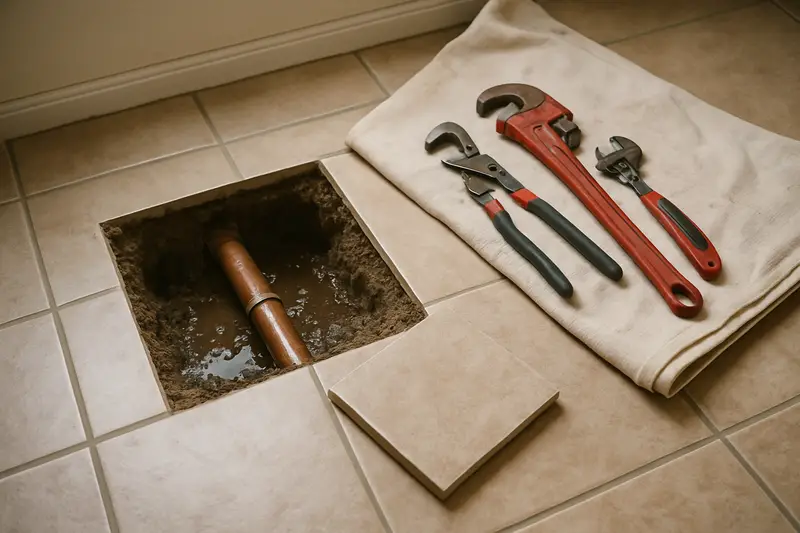
A slab leak is a break in a water line that runs under or through a home's concrete foundation. Most single-storey houses built in Southern California from the 1950s through the 1970s have copper supply lines buried in exactly that position.
Answered 24/7
Nights, weekends, holidays
Licensed local plumbers
Licensed in California
Pinpoint locating
Acoustic, thermal, tracer gas
Price ranges up front
Know the range before they come
Signs that point here
- A warm or hot patch on the floor, often in a hallway, kitchen or bathroom
- Hearing water running under the floor when every tap is off
- Damp or lifting flooring, carpet that's wet at the edge of a room
- New cracks in tile or slab, or a musty smell from the floor
- The water heater running more often than it used to
Why slab leaks are so common here
Post-war tract builders across Orange County and the Long Beach area laid soft copper tubing in trenches beneath the slab and poured concrete over it. That was cheap and quiet, and for decades it worked. Sixty-plus years later the same pipe has been rubbing against gravel and concrete with every pressure surge and every expansion of the hot line, and the hard Colorado River and State Project water that much of the region drinks leaves scale that accelerates pitting.
Expansive clay soils in parts of north Orange County and the Inland Empire add a second stress: the ground swells in a wet winter and shrinks in a dry summer, flexing the slab and whatever is buried in it.
Hot side or cold side
Plumbers find more slab leaks on the hot-water line than the cold. Hot pipe expands and contracts every time a tap runs, which wears it against the concrete, and hot water corrodes copper faster. Hot-side leaks are also the ones you can feel: a patch of floor that's warm to bare feet is the classic sign.
Cold-side slab leaks are quieter and often only show up on the water bill or as dampness at the edge of a room. They tend to take longer to find, which is why detection on the cold side often lands at the top of the price range.
Repair options, compared
A reroute often costs about the same as a spot repair once flooring and concrete patching are counted, and it removes the buried pipe from the equation. Ask for both prices.
| Option | What it involves | Best when |
|---|---|---|
| Spot repair | Open a hole in the slab above the leak (often about 2 ft square), cut out the bad section, splice, patch the concrete | Pipe is otherwise in good shape; single leak; easy-to-reach floor |
| Reroute | Abandon the buried section and run new PEX or copper through the attic and down inside walls | Leak is under cabinets or expensive flooring; pipe is ageing; a second leak is likely |
| Repipe | Replace all supply lines in the house, usually overhead | Multiple past leaks; pinholes showing up elsewhere; planning to stay long-term |
What to do in the meantime
- If the leak is on the hot side, turn the water heater's cold inlet valve off. That stops water feeding the leak while leaving cold water on.
- Close the main valve overnight if the meter is moving quickly.
- Photograph damp flooring and any cracks, with dates, for insurance.
- Pull back rugs and move furniture off damp areas so the floor can dry.
Questions people ask
How do I know if I have a slab leak?+
The strongest signs are a warm spot on the floor, the sound of running water with everything off, and a meter that moves when nothing is in use. A plumber can confirm it with a pressure test and pinpoint it acoustically.
Is a slab leak an emergency?+
Not usually in the first hours, but it shouldn't wait weeks. Water under a slab can undermine soil, damage flooring and feed mould. Shut off the affected side and book a locate.
Does insurance pay for slab leak repair?+
Many California homeowners policies cover water damage and sometimes the cost to access the pipe (breaking and patching the slab), but rarely the pipe itself. Policies vary, so call your insurer before work begins.
Will a slab leak come back?+
The repaired spot rarely fails again, but if the rest of the buried pipe is the same age and condition, another leak elsewhere is common. That's the main argument for rerouting or repiping instead.
Can a slab leak crack my foundation?+
Over time, water washing out soil beneath the slab can contribute to settling and cracks, especially in clay soils. Catching it early keeps that risk low.