Guide · updated 2026-10-02
Copper pinhole leaks in older Southern California homes
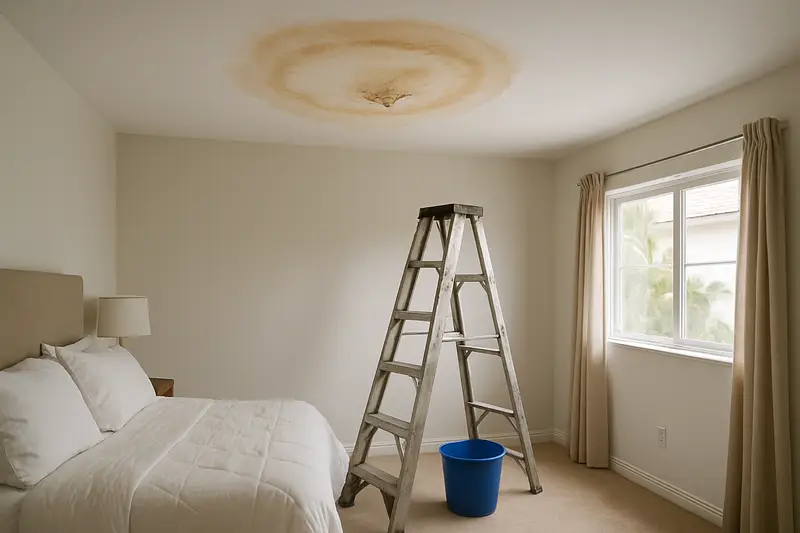
Copper was the premium choice for decades and much of it is still going strong. But the pinhole leak (a hole small enough to miss, spraying a fine mist inside a wall) is a familiar story in houses from the 1950s to the 1980s.
What a pinhole leak is
A pinhole is corrosion that starts on the inside surface of the pipe and works outward until it breaks through. The hole is often less than a millimetre across, but under 60–80 psi it sprays continuously. Inside a wall, that means framing and drywall soaking for weeks before a stain appears. Under a slab, it means a warm floor or a moving meter.
Why it happens
- Water chemistry: the mix of imported Colorado River and Northern California water, plus local groundwater, varies in hardness and pH between districts and over time, and some combinations are harder on copper.
- Velocity: undersized pipe or a pump-driven recirculation line moves water fast enough to erode the inside of elbows and tees.
- Hot water: corrosion speeds up with temperature, which is why hot lines fail first.
- Installation: excess flux left inside joints, or burrs left at cut ends, start local corrosion.
- Thin-wall pipe: Type M copper, thinner than Type L, was widely used in residential construction and has less metal to lose.
Signs your house is in the pinhole years
- Blue-green staining on exposed copper under sinks or at the water heater
- One pinhole repair already, especially on a hot line
- A house from the 1960s–1980s with original copper
- Small damp spots on walls or ceilings that come and go
Patch, reroute or repipe
A single pinhole is a simple repair once the wall is open: cut out the section, solder or press in a new piece. Clamp-on repairs are fine as a temporary stop but shouldn't stay hidden in a wall.
The question is what happens next. Pinholes cluster: if one hot line has failed, nearby sections on the same line have usually been through the same conditions. Many plumbers recommend replacing the whole affected run (often the hot side) after a second pinhole, and discussing a whole-house repipe after a third.
Reducing the risk if you're keeping the copper
- 1
Check the pressure
Have the pressure regulator tested. Street pressure in many hillside neighbourhoods runs well above 80 psi, and a failed regulator adds stress to every joint.
- 2
Lower the water heater temperature
Around 120°F is enough for most households and slows hot-side corrosion.
- 3
Look at recirculation
A hot-water recirculation pump running constantly at high speed can erode pipe. A timer or a demand-controlled pump reduces wear.
- 4
Watch the meter
Check the low-flow indicator a few times a year with everything off. Catching a pinhole early saves the drywall.