Typical range $5,000–$16,000
Repiping after repeat leaks
One leak is bad luck. A second and third in the same house within a few years usually means the pipe itself is wearing out, and fixing leaks one at a time starts costing more than replacing it.
Answered 24/7
Nights, weekends, holidays
Licensed local plumbers
Licensed in California
Pinpoint locating
Acoustic, thermal, tracer gas
Price ranges up front
Know the range before they come
Signs that point here
- Two or more pinhole or slab leaks in the past few years
- Galvanised steel pipe with rusty water or falling pressure
- Green or blue staining on copper pipe and fittings
- Low pressure upstairs or at the far end of the house
- Planning a remodel that will open walls anyway
When repiping beats repairing
Most plumbers suggest thinking about a repipe after the second slab or pinhole leak, and seriously considering it after the third. Each leak repair costs money, often an insurance deductible, and some damage to floors and walls; the underlying pipe keeps ageing. Homes with galvanised steel supply lines, common in houses built before the early 1960s, are candidates even without leaks, because the pipe narrows with rust until pressure drops.
PEX or copper
Both are approved in California. PEX dominates repipes here largely because of cost and speed. Ask the plumber which they recommend for your house and why.
| PEX | Copper (Type L) | |
|---|---|---|
| Cost | Lower: fewer fittings, faster to run | Higher material and labour cost |
| Wall openings | Fewer; flexible pipe snakes through | More; rigid runs need access |
| Hard-water performance | Doesn't scale or pinhole | Can pinhole over decades with aggressive water |
| Sunlight / heat | Must be protected from UV | Unaffected |
| Typical job length | 2–4 days | 3–6 days |
What a repipe looks like
- 1
Plan the route
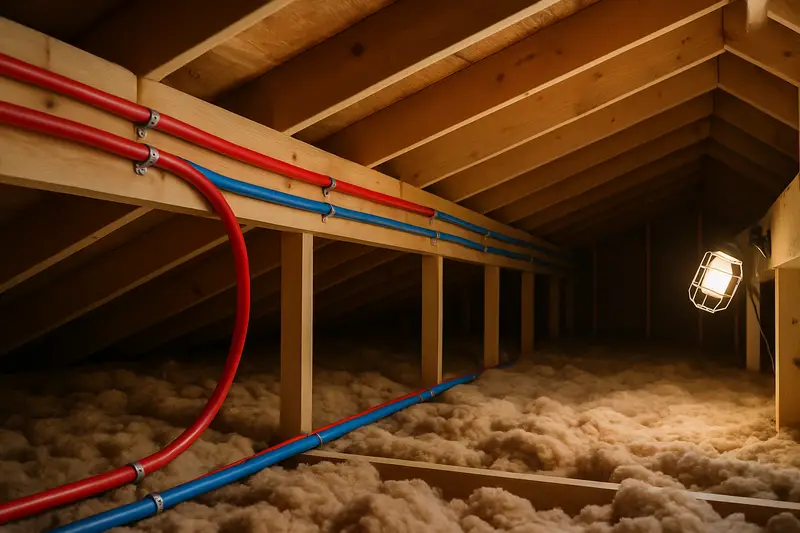
New lines are run overhead through the attic and dropped down inside walls to each fixture, abandoning the buried slab lines entirely.
- 2
Small openings
Expect a series of small openings, usually behind fixtures and in hallway ceilings, rather than whole walls removed.
- 3
Switch-over
Water is typically off for a few hours on each day of work, and back on overnight.
- 4
Inspection and patching
The city inspects the new piping before walls are closed. Patching and paint follow, by the plumber or a separate trade.
Questions people ask
How long does a whole-house repipe take?+
Two to five working days for most single-family homes, with water back on each evening.
Do I need to move out during a repipe?+
Usually not. Expect daytime water shut-offs and some dust in the rooms being worked on.
Does a repipe need a permit?+
Yes, in every Orange and Los Angeles County city. A licensed plumber pulls the permit and schedules the inspection.
Will a repipe stop slab leaks for good?+
If the new lines run overhead, the old buried lines are disconnected and can't leak, so slab leaks on supply lines stop being a risk.