Typical range $200–$600
Main & yard water line leaks
The service line carries water from the meter at the street to the house. It's buried, it's under full street pressure, and on the homeowner's side of the meter it's the homeowner's responsibility.
Answered 24/7
Nights, weekends, holidays
Licensed local plumbers
Licensed in California
Pinpoint locating
Acoustic, thermal, tracer gas
Price ranges up front
Know the range before they come
Signs that point here
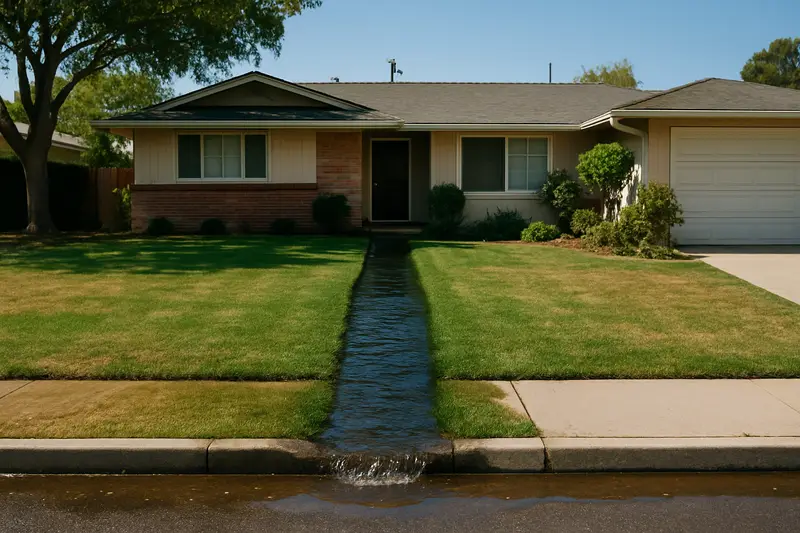
- A wet or unusually green strip of lawn between the street and the house
- Water seeping up through a driveway or sidewalk crack
- The meter keeps turning even with the house shut-off closed
- A sudden drop in water pressure throughout the house
- Muddy or discoloured water after a pressure change
Who owns which part
Water utilities generally own and maintain the meter and the pipe on the street side of it. Everything from the meter outlet to the house (the service line, the pressure regulator, the house shut-off) belongs to the property. If water is surfacing near the meter box itself, call the water utility first; they'll tell you whether the leak is on their side.
What service lines are made of here
Homes built in the 1950s and 1960s across north Orange County and the Gateway Cities commonly have galvanised steel service lines, which rust from the inside and eventually split. Later homes typically have copper, which lasts longer but can pinhole in corrosive soil. Some homes, especially those replaced in the 1980s and 1990s, have polybutylene or early plastic lines that crack at fittings. Knowing the age of the house gives the plumber a head start.
How the leak is found
- 1
Prove it's outside
Close the house shut-off and watch the meter. If the leak indicator still moves, the leak is between the meter and the valve.
- 2
Trace the line
The pipe route is traced with a line locator, or by following the logical path from meter to shut-off. Old lines don't always run straight.
- 3
Listen along the route
A ground microphone picks up the leak's noise through soil. Hard surfaces like a driveway carry sound well; loose soil can muffle it.
- 4
Tracer gas for quiet leaks
If the leak can't be heard, gas is pushed through the drained line and detected where it surfaces.
Repair or replace
A single break in a line that's otherwise sound can be dug up and spliced. If the line is galvanised, or has already leaked once, replacement is usually the better money: a new copper or PE line can often be pulled or bored through with minimal trenching, avoiding a torn-up lawn or a cut driveway.
While the line is being worked on, it's worth having the plumber check the pressure regulator. Many neighbourhoods see street pressure well above 80 psi, and a failed regulator puts extra strain on every pipe and fixture in the house.
Questions people ask
How can I tell if my main water line is leaking?+
Close the shut-off valve where the line enters the house and watch the meter. If the low-flow dial keeps moving, water is leaking somewhere between the meter and that valve.
Who pays for a leak between the meter and the house?+
In most Southern California cities, the property owner. The utility is responsible for the meter and the pipe on the street side.
Will they have to dig up my driveway?+
Not always. A precise locate keeps excavation to one spot, and replacements can often be trenchless, bored or pulled under the driveway.
Is it an emergency?+
A visible stream or a sudden loss of pressure is. A slow seep can wait a day or two, but turn the water off at the meter-side valve overnight if the bill is a concern.