Santa Ana · $250–$700
Slab leak detection in Santa Ana
Santa Ana's slab leaks come mostly from its post-war tracts, but the city's long history of additions and conversions means the leaking pipe isn't always where the original plans would put it.
Answered 24/7
Nights, weekends, holidays
Licensed local plumbers
Licensed in California
Pinpoint locating
Acoustic, thermal, tracer gas
Price ranges up front
Know the range before they come
Additions change the map
A large share of Santa Ana homes have been extended: a bedroom added behind the kitchen, a garage turned into living space, a laundry moved indoors. When that happens, the existing supply line is usually extended under the new slab or along its edge, with joints where the old pipe meets the new. Those joints are a common leak point, and they're often not where a plumber would first expect.
If you know where the house has been extended, say so when you call. It can save time on the locate.
Finding it
- 1
Pressure test, hot and cold separately
Splitting the system at the water heater shows which side is leaking.
- 2
Thermal scan of the floors
Hot-side leaks warm the slab around them, often tracing the pipe route, including any surprise runs under additions.
- 3
Acoustic locate
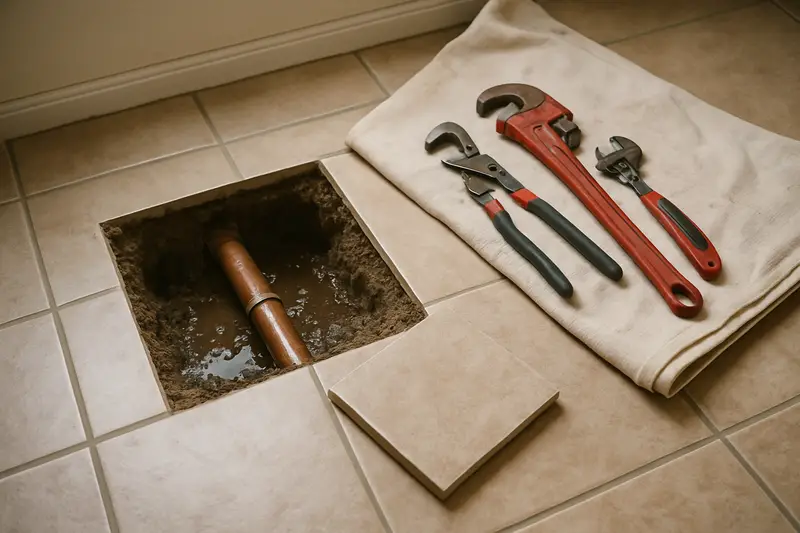
Ground microphones pinpoint the loudest spot on the slab so any opening is small.
The older-home exception
Santa Ana's pre-war homes in French Park, Floral Park and around downtown are mostly on raised foundations, so they don't have slab leaks in the usual sense. If the floor feels damp or the meter is moving in one of those houses, the problem is more likely in the crawlspace, which is easier to reach and usually cheaper to fix. Some of those homes do have slab-on-grade additions at the back, though, which can leak like any other slab.
Choosing the fix
For a leak under an addition, rerouting is often the cleaner option, because the addition's flooring is usually newer and harder to patch invisibly. For a leak in the original slab under carpet, a spot repair can make sense. Compare both in writing. See spot repair vs reroute vs repipe.
Before the plumber arrives
Having that information ready often shortens the locate by an hour or more, which matters when you're paying for time.
- Find the water heater and its cold inlet valve; if the floor near the leak is warm, close that valve to stop the hot side
- Note any rooms that were added or converted, and roughly when
- Check whether a previous owner left a patch in the slab, often visible in a closet or the garage floor
- Move furniture and rugs away from damp areas so the floor can be scanned
- If a rear unit shares the meter, make sure the plumber can get into it too
Questions people ask
Can a plumber find a leak under a garage conversion?+
Yes. The same pressure, thermal and acoustic methods work; telling them about the conversion helps them guess the route sooner.
My Santa Ana house has a crawlspace. Can it still have a slab leak?+
Only in parts built on slab, such as a rear addition. Otherwise, leaks will be in the crawlspace, where they're easier to reach.
Is a permit needed for slab leak work in Santa Ana?+
Reroutes and repipes generally require a permit; a licensed plumber handles that.