Typical range $150–$600
Leak detection
Leak detection is the work of finding exactly where water is escaping from a pressurised pipe before anything gets cut open. Done well, it turns a vague worry into a single spot marked on a floor or wall.
Answered 24/7
Nights, weekends, holidays
Licensed local plumbers
Licensed in California
Pinpoint locating
Acoustic, thermal, tracer gas
Price ranges up front
Know the range before they come
Signs that point here
- The water meter's low-flow dial moves with every fixture off
- A bill that's noticeably higher than the same month last year
- The sound of running water when nothing is running
- Damp carpet, swollen baseboards or a musty smell with no obvious source
- Low water pressure that came on gradually
What counts as a hidden leak
Any leak you can't see directly: a pinhole in a copper line inside a wall, a joint that has let go under a concrete slab, a cracked service line buried between the meter and the house, a fitting weeping inside a ceiling below an upstairs bathroom. Supply lines are under constant pressure, typically 50 to 80 psi in Orange County neighbourhoods, so even a small opening pushes out a steady stream around the clock.
Drain leaks behave differently. They only leak when something drains, so they show up as stains and smells after showers or laundry rather than a spinning meter. Both are worth tracking down, but they're found with different tools, so tell the plumber which pattern you're seeing.
How a plumber finds it
- 1
Meter and pressure checks
With all fixtures off, the meter tells them whether water is leaving the system at all. A pressure gauge on a hose bib, watched over 10–15 minutes with the main closed, shows how fast pressure bleeds off.
- 2
Splitting the system
Closing the water heater's cold inlet separates hot from cold. Many slab leaks are on the hot side because heat and expansion stress the pipe, so this step alone halves the search.
- 3
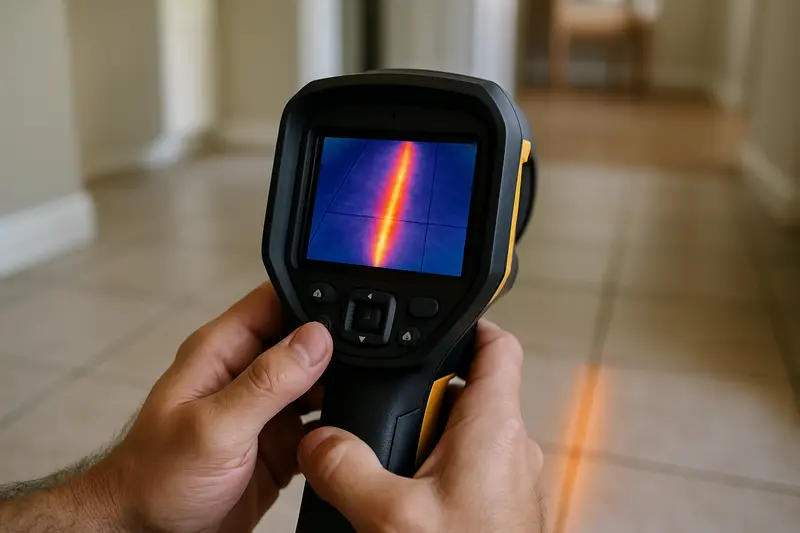
Thermal imaging
A hot-water leak warms the slab or wall around it. An infrared camera shows that as a bloom of colour, often tracing the path of the pipe.
- 4
Acoustic listening
Ground microphones and contact sensors amplify the hiss of escaping water. The plumber walks a grid over the suspected run and marks the loudest point.
- 5
Tracer gas, when needed
For quiet leaks or deep lines, the pipe is drained and filled with a harmless hydrogen-nitrogen mix that rises through soil and concrete, where a sniffer picks it up.
What happens after the leak is marked
Detection and repair are separate jobs and are usually priced separately. Once the spot is marked you should get options: open up and repair at that point, bypass the damaged section by running new pipe a different way or, if the pipe is failing in more than one place, talk about repiping.
Ask for each option in writing with a price range before anyone opens a wall or floor. If you plan to file an insurance claim, call your insurer at this stage; most want photos of the locate and the damage before work starts.
Emergency or can it wait?
Shut the main valve and call right away if water is visible and spreading, a ceiling is sagging or dripping, or water is near outlets or the electrical panel. A meter that creeps slowly, a warm spot on the floor, or a bill that's crept up over two cycles is real but rarely a middle-of-the-night emergency. A daytime appointment is usually cheaper.
Questions people ask
How long does leak detection take?+
Most locates take one to three hours. A straightforward wall or ceiling leak can be quicker; a slab or yard line with a quiet leak can take longer, especially if tracer gas is needed.
Do I need to be home?+
Yes. The plumber needs to run fixtures, shut valves and get into every room the pipe passes through, and you'll want to hear the options before any repair is agreed.
Can a leak be found without cutting into anything?+
Locating is non-invasive in almost every case: meters, cameras and microphones work from the surface. Opening only happens for the repair, and only after you've agreed to it.
Is leak detection worth paying for if I can just see a wet spot?+
Water travels along pipes, framing and slab joints before it surfaces, so the wet spot is often several feet from the leak. Paying for a locate usually means one small opening instead of several exploratory ones.
Should I shut off the water while I wait?+
If the meter shows a fast leak or you can see water spreading, yes. For a slow leak, many people close the main overnight and reopen it in the morning to limit damage until the appointment.