Typical range $200–$600
Leaks in walls & ceilings
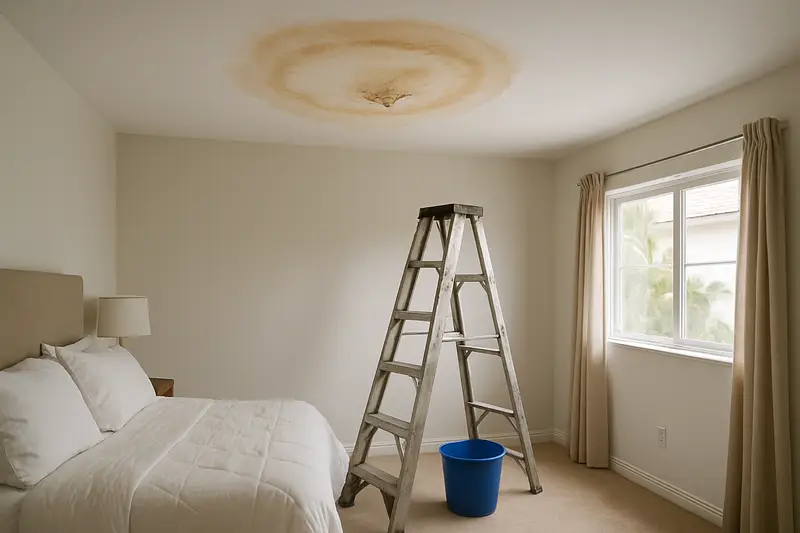
A stain on a ceiling or a soft patch of drywall is the end of the story, not the start. The water got there along a pipe, a joist or a stud, and the leak that caused it can be several feet away.
Answered 24/7
Nights, weekends, holidays
Licensed local plumbers
Licensed in California
Pinpoint locating
Acoustic, thermal, tracer gas
Price ranges up front
Know the range before they come
Signs that point here
- A yellow-brown ring on the ceiling below a bathroom or laundry
- Paint bubbling, peeling or cracking on a wall
- Drywall that feels soft or crumbles when pressed
- A drip from a ceiling light fixture or vent
- Baseboards swelling or separating from the wall
Supply leak, drain leak, or not plumbing at all
The first job is working out what kind of water it is. A supply leak is under constant pressure, so the stain grows whether or not anyone uses water, and the meter moves with everything off. A drain or shower-pan leak only wets the ceiling after someone showers, bathes or runs a sink upstairs. A roof leak or AC condensate leak tracks the weather or the air conditioner, not the plumbing.
Telling the plumber when the stain gets worse (always, after showers, after rain, on hot afternoons) saves a lot of time.
How the leak is traced
- 1
Moisture mapping
A pin or pinless moisture meter is swept across the wall or ceiling to find the wettest point and the direction the water is spreading from.
- 2
Thermal camera
Wet drywall reads cooler than dry drywall, and a leaking hot line reads warmer. The image usually shows the wet area's shape and the pipe path feeding it.
- 3
Fixture testing
For drain-side leaks, the plumber runs each upstairs fixture in turn (tub, shower, toilet, sink) and watches for the stain to darken.
- 4
Small inspection opening
If the source still isn't clear, a small cut at the wettest spot lets a borescope look along the cavity, rather than opening the whole ceiling.
Common culprits in Southern California homes
- Pinhole leaks in ageing copper lines, often on hot-water runs to second-floor bathrooms
- Failed shower pans or grout in upstairs showers, which only leak during use
- Loose or corroded fittings at the angle stops behind toilets and sinks
- Washing machine supply hoses or the box they connect to inside the wall
- Ice-maker and refrigerator lines run through cabinets and walls
- AC condensate lines in the attic, which drip mainly in summer: not a plumbing leak, but often mistaken for one
Limiting the damage
If a ceiling is bulging with water, put a bucket under it and pierce the lowest point with a screwdriver so it drains in one place instead of collapsing. Turn off the power to any light fixture that's dripping. Shut the main valve if the stain is growing visibly.
Drywall that's been wet for more than a couple of days usually needs replacing, and the cavity should be dried before it's closed up. Plumbers often hand the patching to a drywall contractor; ask who will handle it so the hole isn't left open.
Questions people ask
Why is there a water stain on my ceiling with no rain?+
If it hasn't rained, the likely sources are a supply pipe, a drain or shower pan upstairs, or an air-conditioning condensate line. When the stain grows tells you which.
Is a ceiling leak an emergency?+
It is if the ceiling is sagging, water is near electrics, or the stain is spreading quickly. A dry stain that appeared once and hasn't changed can usually wait for a daytime appointment.
Do plumbers fix the drywall?+
Most repair the pipe and leave the drywall for a separate trade, though some coordinate it. Ask before work starts.
How big a hole will they cut?+
With a good locate, often a single opening of about a foot square, enough to reach the pipe and make the repair.