Typical range $150–$500
Hidden leaks & high water bills
A water bill that jumps without any change in how you use water is the most common way Southern California homeowners discover a leak. The bill is a meter reading, and the meter doesn't lie; the question is where the water went.
Answered 24/7
Nights, weekends, holidays
Licensed local plumbers
Licensed in California
Pinpoint locating
Acoustic, thermal, tracer gas
Price ranges up front
Know the range before they come
Signs that point here
- A bill 30% or more above the same billing period last year
- The meter's leak indicator turns with everything off
- A toilet that refills by itself every so often
- Grass that's greener or softer in one strip of the yard
- No visible water anywhere, but the meter keeps counting
Where the water usually goes
In order of how often plumbers find them: toilets that leak silently into the bowl; irrigation valves or broken drip lines; the buried service line between the meter and the house; slab or wall leaks; and water heaters leaking into a drain pan or floor drain. The first two are cheap fixes and explain a large share of surprise bills, so rule them out first.
Southern California water agencies bill in units of 748 gallons (one hundred cubic feet). A toilet running quietly can waste 200 gallons a day (around eight billing units a month), which is often enough on its own to explain a bill that suddenly doubled.
Checks you can do before calling
- 1
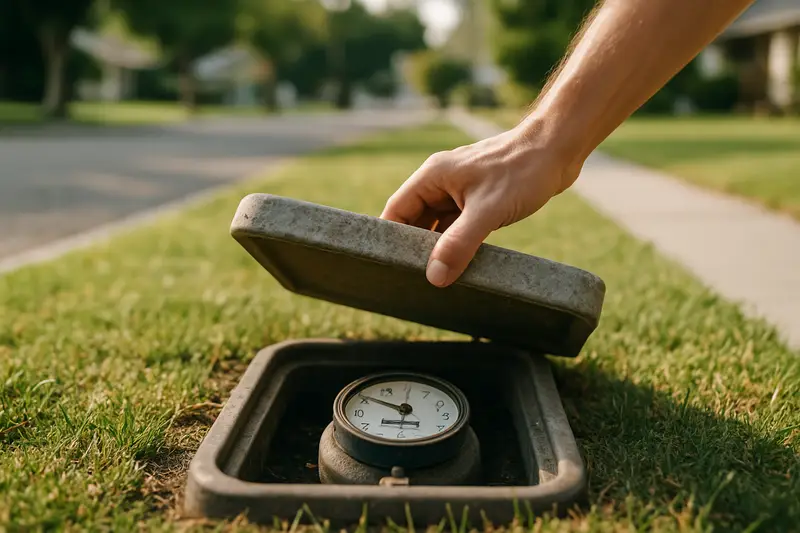
Read the meter twice
Note the meter reading at night after the last tap is used, then again first thing in the morning before anyone runs water. Any change is a leak.
- 2
Dye-test each toilet
Put a few drops of food colouring in the tank and wait 15 minutes without flushing. Colour in the bowl means the flapper is leaking.
- 3
Switch the irrigation off
Turn the controller to off for a day and watch the meter. If the leak indicator stops, the problem is in the sprinkler system.
- 4
Close the house shut-off
If the meter keeps moving with the house valve closed, the leak is on the service line outside. See main and yard water line leaks.
When to bring in a plumber
If the toilet and irrigation checks come back clean and the meter still moves, the leak is inside a wall, under the slab or along the buried line: places that need equipment to find. A plumber will pressure-test the system in sections to decide which, then use thermal or acoustic tools to pinpoint it. Expect the trace to take one to two hours.
Keep the high bill. Many Southern California water utilities offer a one-time leak adjustment if you show that a leak was found and repaired. A plumber's invoice describing the leak and the fix is usually what they ask for.
Questions people ask
Why is my water bill so high all of a sudden?+
The usual culprits are a leaking toilet, a broken irrigation valve or line, or a hidden pipe leak. A meter test with everything off tells you quickly whether water is leaving the system.
Can the water company check for leaks?+
Some utilities will check the meter and confirm a leak is registering, but finding where it is inside your property is the homeowner's responsibility, which is where a plumber comes in.
Will my water district refund a leak?+
Many offer a one-time adjustment after a repaired leak. Policies differ by city and district, so call the number on your bill and ask what documentation they need.
Can a hidden leak cause mould?+
Yes. A slow leak inside a wall can keep framing damp for months. If you smell mustiness, mention it so the plumber checks moisture levels in the surrounding area.