Guide · updated 2026-10-02
Slab leak repair vs reroute vs repipe
Once a slab leak is found, there are three ways to deal with it. The right one depends less on the leak and more on the pipe around it, the floor above it, and how long you plan to stay.
The three options at a glance
| Spot repair | Reroute | Repipe | |
|---|---|---|---|
| Typical range | $1,500–$4,500 | $2,000–$6,500 | $5,000–$16,000 |
| Floor opened? | Yes, at the leak | No | No |
| Walls opened? | No | A few small openings | Several small openings |
| Time | 1–2 days plus concrete cure | 1–2 days | 2–5 days |
| Fixes | This leak | This line | Every supply line |
Spot repair: when it makes sense
The plumber cuts and breaks out a section of slab over the marked leak, digs down to the pipe, replaces the damaged piece, pressure-tests, backfills and patches the concrete. It's the most direct fix and works well when the leak is under easy flooring, a garage, a utility room, carpet that can be rolled back, and the rest of the pipe is in reasonable condition.
The catches: flooring repair can cost as much as the plumbing, especially for tile that's no longer made, and the other buried pipe is the same age as the piece that failed.
Reroute: the usual middle path
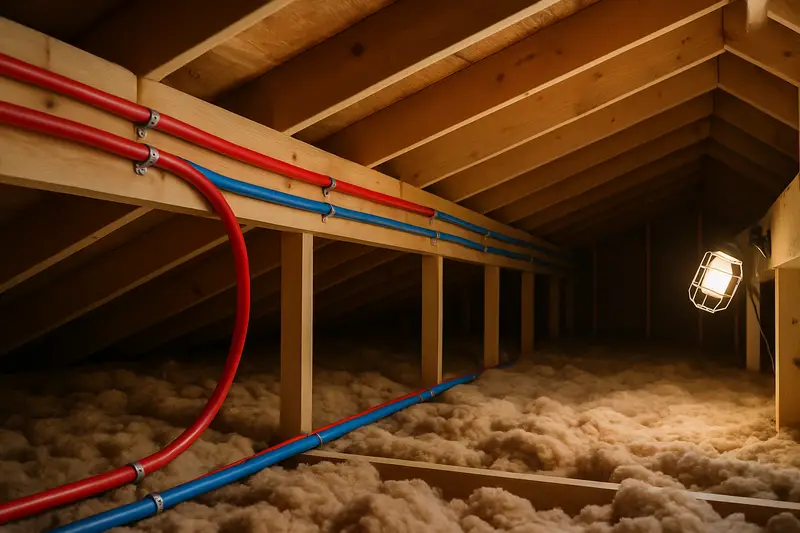
Instead of going after the leak, the plumber cuts the leaking line off at both ends where it comes out of the slab and runs a new line through the attic or walls to replace it. The old pipe stays in the ground, disconnected.
Reroutes are common in Orange County slab homes because they avoid breaking floors and remove the failing pipe from service. Expect a few small openings in walls or ceilings to drop the new line down to fixtures. PEX is the usual material; insulated where it runs through a hot attic.
Repipe: when the pattern says so
If this is the second or third slab leak, or copper elsewhere in the house has pinholed, the remaining buried lines are likely on the same path. A whole-house repipe moves every supply line overhead and ends slab leaks on the supply side for good. It's the biggest upfront cost but often the cheapest over ten years. See repiping after repeat leaks.
How to decide
- 1
Count past leaks
First leak in an otherwise healthy system: spot repair or reroute. Second leak: lean to reroute. Third: get a repipe price.
- 2
Look at what's above it
Under expensive or irreplaceable flooring, or under kitchen cabinets, a reroute usually wins.
- 3
Think about your timeline
Selling within a couple of years? A clean spot repair with documentation may be enough. Staying a decade? Removing buried pipe from service has more value.
- 4
Check the insurance angle
Some policies pay toward breaking and restoring the slab to reach the pipe. That can tilt the numbers toward a spot repair, so ask your insurer.
- 5
Get prices side by side
Ask the plumber to price the options in writing so you're comparing the same scope, including patching.