Typical range $250–$650
Pool & spa leaks
Every pool loses some water to evaporation, and in an Orange County summer that can be a quarter of an inch a day. A pool that drops faster than that, or keeps dropping when the weather cools, is usually leaking.
Answered 24/7
Nights, weekends, holidays
Licensed local plumbers
Licensed in California
Pinpoint locating
Acoustic, thermal, tracer gas
Price ranges up front
Know the range before they come
Signs that point here
- Water level dropping more than about ¼ inch a day
- The autofill running constantly or the water bill climbing in summer
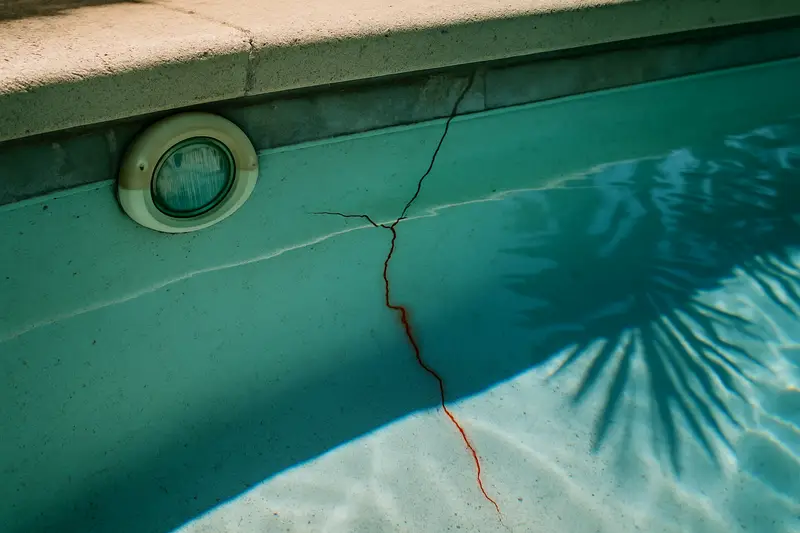
- Cracks in the plaster or tile line, or loose tiles
- Wet soil or standing water near the pool equipment
- Algae that keeps coming back because fresh water dilutes the chemicals
First, the bucket test
- 1
Set it up
Put a bucket on the first or second pool step and fill it so the water inside matches the pool level. Mark both levels, inside the bucket and on the outside.
- 2
Leave it for 24 hours
Turn off the autofill. Run the pump on its normal schedule.
- 3
Compare
Evaporation drops both levels equally. If the pool level falls noticeably more than the bucket, the pool is leaking.
- 4
Repeat with the pump off
If the pool loses more with the pump running, the leak is likely in the pressure-side plumbing; more with it off points to the suction side or the shell.
Where pool leaks usually are
- Around light niches, skimmer throats and return fittings, where the plaster meets a different material
- Underground plumbing lines between the pool and the equipment pad
- At the equipment pad itself: pump seals, filter O-rings, heater connections
- Cracks in the shell, more common in older pools and on expansive clay
- Spa spillways and the joint between spa and pool
How specialists find them
Detection starts with a pressure test of each plumbing line to see which one won't hold. A diver or a technician on the steps then puts a few drops of dye next to each fitting and crack; a leak pulls the dye in. Underground lines are pinpointed with hydrophones, microphones that work underwater and through soil, so only a small patch of deck has to be cut.
Pool leak detection is a specialty. Some plumbing businesses do it themselves; others refer it to a pool-leak specialist. When you call, say it's a pool so you're matched correctly.
Questions people ask
How much water loss is normal for a pool?+
Around a quarter inch a day in hot, dry, windy weather is typical evaporation in Southern California. Much more than that, especially in mild weather, suggests a leak.
Can a pool leak damage the house?+
A leak near the house can saturate soil against the foundation. Leaks under the deck can also wash out the base and cause settling.
Do I have to drain the pool for repairs?+
Most leak repairs (fittings, lights, small cracks) are done underwater with epoxy or putty. Draining is mainly for resurfacing or major shell repairs.